$1.08mis what you repay on a $500,000 mortgage at 6% over 30 years. The bank didn’t lend you anyone’s savings. It created that money when it approved your loan.
Source: Bank of England (2014); repayments worked out as on the Moneysmart mortgage calculator

When you take out a home loan, you probably picture the bank handing over money that other people saved. That isn’t what happens. The bank types a new deposit into your account, and that deposit is brand-new money. Then you spend 30 years paying it back with interest. That isn’t a theory from the fringe. It’s how the Bank of England and the Reserve Bank describe it. Most of your money was created as somebody’s debt.
How it works
How a home loan creates money
No saver’s money moves. A new deposit appears.
Based on the Bank of England and the Reserve Bank of Australia
The Bank of England put it plainly in 2014: “Whenever a bank makes a loan, it simultaneously creates a matching deposit in the borrower’s bank account, thereby creating new money.” The interest goes to the bank, which pays a lower rate on its own deposits and keeps “the difference, or spread” to cover its costs and make profits. At 6% over 30 years, a $500,000 loan costs about $2,998 a month, or roughly $579,000 in interest on top of the loan.
The central banks say so themselves
- Banks don’t lend out your savings. The Bank of England says “the majority of money in the modern economy is created by commercial banks making loans”, and that they don’t simply pass on what savers deposit.
- The textbook story is wrong. The same paper says banks don’t “multiply up” central bank money to make loans, the way “fractional reserve” lessons teach.
- Australia works the same way. The RBA says deposits are “the greatest share of money in a modern economy” and are created when lenders make loans. It adds that this doesn’t mean they can create money “without limits”: they must meet APRA’s rules and expect to be repaid.
- Cash is the small part. In the UK, bank deposits make up 97% of the money in circulation. Notes and coins are the rest.
Then the Reserve Bank created $281 billion
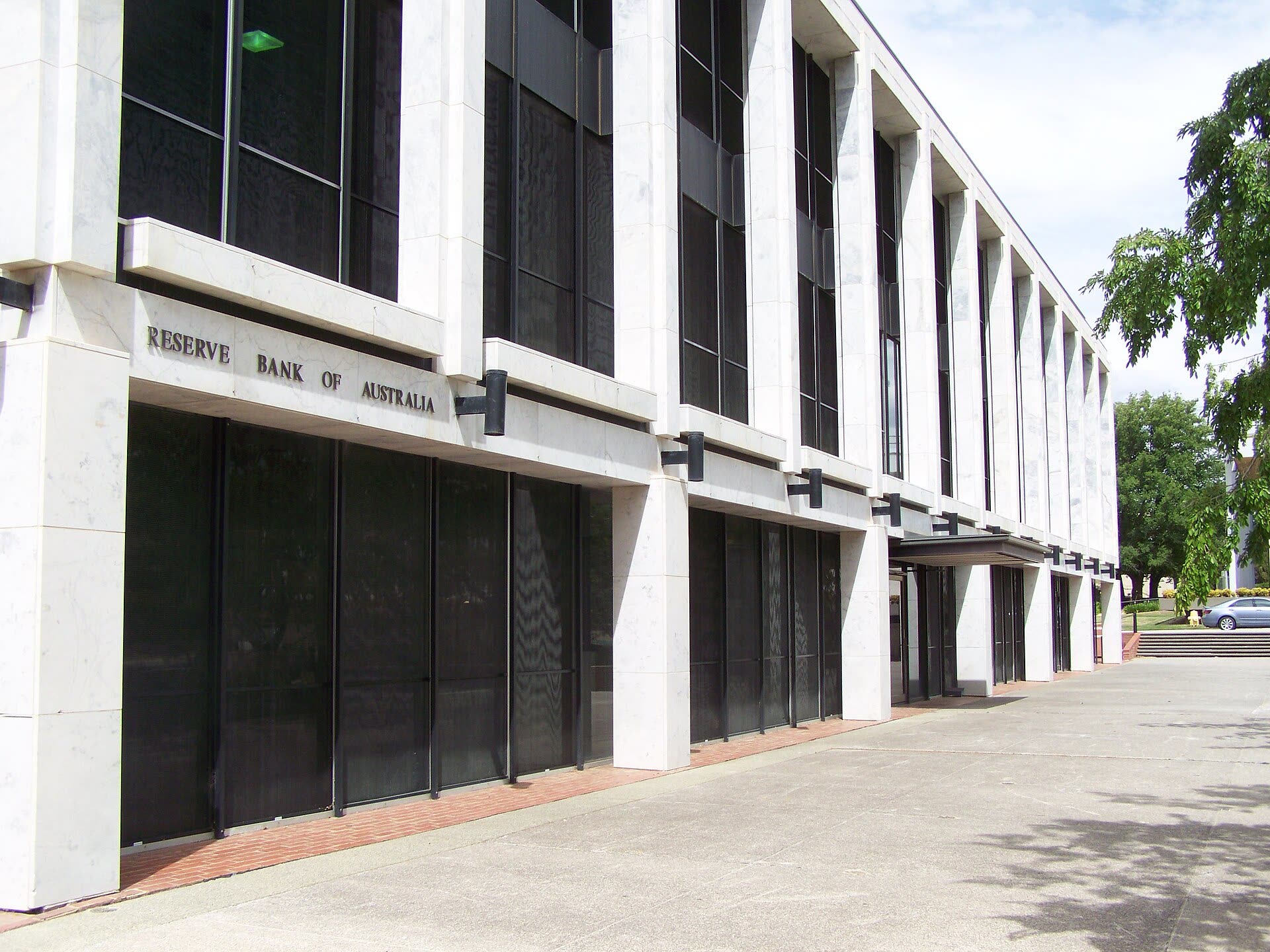
In the pandemic, the RBA did it too. Quantitative easing means the central bank creates new money to buy bonds, pushing interest rates down. From November 2020 to February 2022, the RBA bought $281 billion of bonds: $224 billion issued by the Australian Government and $57 billion by the states. Annual inflation then hit 7.8% in the December 2022 quarter, the highest since 1990. Not all of that was the RBA’s doing, but its own review credits its pandemic package with “stronger growth and inflation”.
What the bond buying cost, and what it saved
The RBA’s own estimates, to 2033
Both sides of the ledger are public money.
The RBA’s own review says the program cut long-term bond yields by about 0.3 percentage points. It also put the cost to the Bank at $35 billion to $58 billion to 2033, against about $7 billion saved by governments. When rates rose, the bonds fell in value. The RBA booked a $36.7 billion accounting loss in 2021/22, mostly unrealised losses on those bonds, negative equity of $12.4 billion, and no dividend to the government.
Meanwhile, the debt keeps growing on your side. The RBA’s March 2026 review says “household indebtedness has been a key vulnerability domestically for many years”. Every new loan adds new money, and new debt, to the system.
The fix: protect your savings and shrink your debt
You can’t opt out of a system where money is created as debt. You can stop it working against you. That means three things: make sure your savings are covered if a bank fails, pay the bank less interest, and keep part of your savings in something no bank can create.
What each fix does
Your deposits, your loan, and what sits outside both
Sources: APRA; Moneysmart
Financial Claims Scheme
Your bank balance is a debt the bank owes you. If the bank fails, the government’s Financial Claims Scheme covers deposits up to $250,000 per account holder per bank. Above that, you’re exposed. Some brands share one banking licence and one $250,000 limit: St George is part of Westpac, and Bankwest is part of the Commonwealth Bank. Free.
Check your bank →Moneysmart mortgage calculator
The government’s free calculator shows what your loan really costs and how much sooner you finish with extra repayments. “In the early years of a home loan, most of your repayment goes towards interest”, so extra money paid then saves the most. Put in your balance, rate and term, then open How can I repay my home loan sooner?
Open the calculator →Gold & silver tracker
No bank can create gold by approving a loan. This site’s free tracker shows live gold and silver prices in A$, values what you already own, and emails you when a price you pick is reached. Gold pays no interest and its price can fall hard, so it’s a hedge, not a savings account.
See live prices →Do this today
- 1. Check your deposits. If you hold more than $250,000 with one bank, or with brands under one licence, split it.
- 2. Run your loan through Moneysmart. See what an extra $100 or $500 a month saves, and use an offset account if your loan has one.
- 3. Know the price of real money. Track gold in A$ and set an alert, so you can judge it on your own terms.
For who owns the banks themselves, read how BlackRock, Vanguard and State Street came to own a slice of everything.
Go deeper
- Where Does Money Come From? by Josh Ryan-Collins and others. The plain guide to how banks really create money.
- The Price of Time by Edward Chancellor. What cheap money and quantitative easing did to savers and asset prices.
What to make of it
The money in your account was created by a bank, as a debt someone owes. That gives banks, and the central bank behind them, enormous power over how much money exists and who pays for it. The limits are real, but they’re set by central bankers and regulators, not by you. You can’t change the system tonight. You can make sure your savings are covered, your loan shrinks faster, and part of your wealth sits where no lender can create more of it.
Sources
- Bank of England (2014): Money creation in the modern economy
- Bank of England (2014): Money creation in the modern economy (full paper, PDF)
- Reserve Bank of Australia: What is money?
- Reserve Bank of Australia (2022): Review of the Bond Purchase Program
- Reserve Bank of Australia (2022): Annual Report, earnings, distribution and capital
- Australian Bureau of Statistics (2023): CPI rose 1.9% in the December 2022 quarter
- Reserve Bank of Australia (2026): Financial Stability Review, March 2026
- APRA: Financial Claims Scheme
- APRA: Different banking businesses under one banking licence
- ASIC Moneysmart: Mortgage calculator
- ASIC Moneysmart: Pay off your mortgage faster
Amazon links are affiliate links. As an Amazon Associate I earn from qualifying purchases.
This article is general information only and isn’t financial advice. It doesn’t take into account your objectives, financial situation or needs. Consider speaking to a licensed financial adviser before making financial decisions.